2 The Rhetorical Situation
Understanding the Rhetorical Situation
While professional and technical writing differ from academic writing in some important ways, they share some key similarities as well. One of those is a concept that builds the foundation for all of the different kinds of writing you might do: the rhetorical situation.
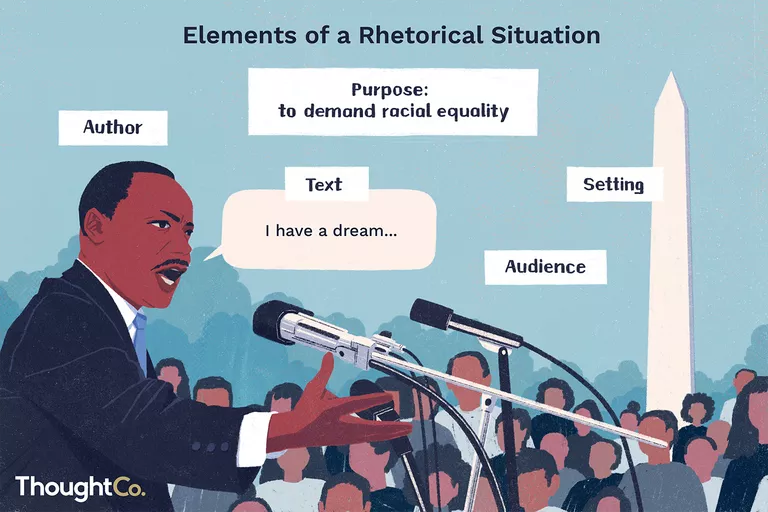
The rhetorical situation is the situation you find yourself in when you need to write something and it is made up of five key elements:
- Purpose
- Audience
- Author
- Text
- Setting
The 5 Elements
Let’s dig into each of the distinct parts of the rhetorical situation.
Purpose
Simply put, this is the why. As in, why are you writing whatever it is you’re writing. There are a few basic categories that most writing purposes fall into:
- Persuade
- Inform
- Propose
- Document
- Analyze
Each of those categories has sub-categories within it. For example, if you’re working as a developer for a software company, you might write to propose a new product line (professional) or you might need to document the process of developing the software and fixing any bugs/issues (technical.)
Understanding the purpose behind your writing is an important first step as almost all of the other elements of the rhetorical situation will be directly impacted by the specifics of your purpose.
Audience
The element of the rhetorical situation most directly impacted by the purpose is the audience. Why is audience so intrinsically linked to purpose? Because you need to ensure that your targeted audience – the person, people, or group you intend to read your writing – is an audience that can help you achieve/accomplish your purpose.
Think of it this way: if your purpose is get funding for the new app you’re developing, your audience needs to be someone(s) who can give you the money you need. Targeting your proposal at a group of college students isn’t likely to get you where you need to go, but targeting Google’s Board of Directors or VP of Development might.
Audience is often the most complex part of the rhetorical situation and one we’ll be paying special attention to as we go through the course.
Author
Most of the time, this is the most obvious element of the rhetorical situation: it’s you. When you write something – whether it’s technical documentation, a sales proposal, a memo outlining new corporate procedures, or even an email to your boss – you are the author.
There are some aspects of being the author that you’ll need to consider, things like:
- your relationship to the audience
- appropriate style
- writing as an individual vs. writing as part of a group
Text
For our purposes ‘text’ will always refer to whatever it is your writing/creating. That might mean a written document, but it also might mean a video, an email, a speech, or a presentation. What type of text you choose/need to write or create will most often be dictated by the other elements of the situation. For example, applying for a job would require a resume and a cover letter while proposing a new project might need a pitch deck or other type of presentation format.
It’s important to remember that different types of texts will be used for different kinds of purposes and will often have different techniques, elements, and requirements.
Setting
We’re all probably familiar with the definition of setting we learned in high school English classes: the time and location when the story takes place. In the context of the rhetorical situation, that’s still a pretty good definition with a few minor tweaks.
That word – context – is a good one to keep in mind. The context in which you find yourself writing is often an important factor to consider. Later on in the course, we’ll spend some time discussing inclusive language which is a fairly recent concept. Twenty-five years ago, the contexts of current events, the culture, and what was acceptable/not acceptable would have been very different and, as a result, the language people used when they wrote things, even professional documents, would seem very different to someone writing in 2025.
Setting can also be thought of as part of ‘text’, as in the setting in which you place your writing. Is it in an email chain with multiple colleagues? Is it in the company newsletter or a letter that goes to outside investors? Or is it social media posts with character limits and multimodality expectations?
TL;DR
Whenever you begin to think about writing something, consider all five elements of the rhetorical situation, to ensure that you’re achieving maximum impact and presenting your ideas in the most effective way.
- Purpose – why you’re writing
- Audience – who you’re writing to
- Author – who are you writing as
- Text – what type of document/presentation do you need to make
- Setting – what’s the context in which you find yourself writing